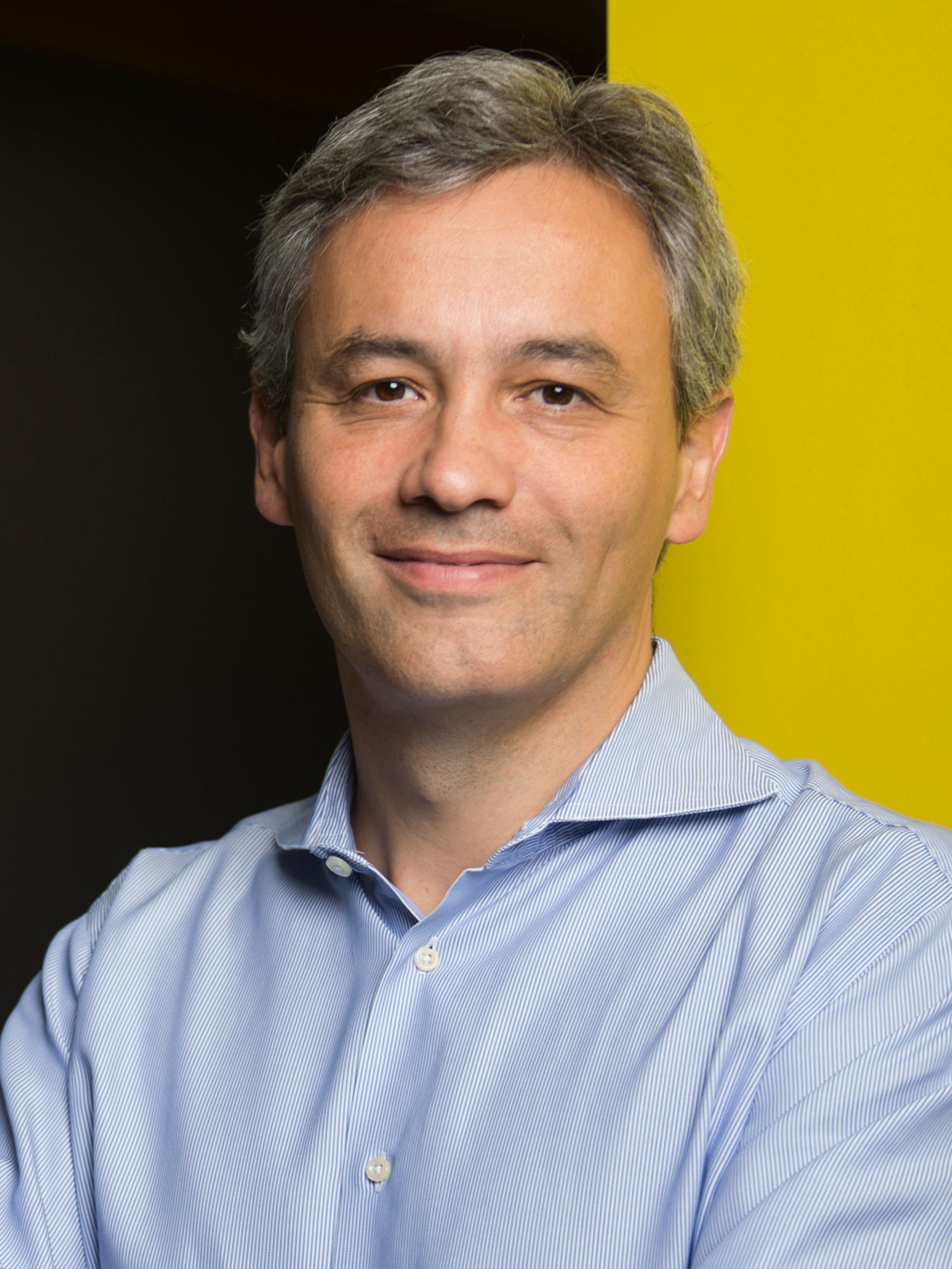
Tommaso Melodia

Tommaso Melodia

William Lincoln Smith Professor

IEEE Fellow, ACM Fellow, NAI FellowFounding Director, Institute for Intelligent Networked Systems (INSI)Editor-in-Chief, Computer Networks (Elsevier)

Phone: (617) 373-3354
Office: 411 ISEC, Department of Electrical and Computer Engineering, Northeastern University, Boston, MA 02115
Email: melodia@northeastern.edu

Education

  • Ph.D. in Electrical and Computer Engineering - Georgia Institute of Technology (2007)
  • Doctorate in Information and Communication Engineering - University of Rome "La Sapienza" (2005)
  • M.S. in Telecommunications Engineering (Laurea) - University of Rome "La Sapienza" (2001)

Research Interests

  • Open RAN and AI-RAN architectures for 5G/6G cellular networks
  • AI/ML and agentic AI for autonomous network control
  • Spectrum sharing and coexistence
  • Wireless digital twins
  • Open-source experimental platforms and testbeds
  • Internet of Things, including underwater and intra-body networks

Biography

Tommaso Melodia is the William Lincoln Smith Professor in the Department of Electrical and Computer Engineering at Northeastern University in Boston. He is the Founding Director of the Institute for Intelligent Networked Systems (INSI) — one of the world’s premier research centers for wireless communications, AI, and networked systems. Originally founded as the Institute for the Wireless Internet of Things (WIoT, 2018) and rebranded as INSI in 2026, it is a transatlantic institute spanning Boston, Burlington, and London, with over 200 members and more than $130M in cumulative external research funding.

He received his Laurea (integrated B.S./M.S.) from the University of Rome “La Sapienza” and his Ph.D. in Electrical and Computer Engineering from the Georgia Institute of Technology in 2007. He is a Fellow of the IEEE, the ACM, and the National Academy of Inventors (NAI), as well as a Fellow of the AAIA and the AIIA. He is an ACM Distinguished Speaker and a recipient of the National Science Foundation CAREER award, and has been listed among Stanford University’s top 2% most-cited scientists.

Prof. Melodia co-founded the AI-RAN Alliance, where he serves on the Executive Board alongside founding members including NVIDIA, SoftBank, T-Mobile, Samsung, Ericsson, and Nokia. He founded Open6G, a DoD-supported industry-university cooperative R&D center for open, programmable, and disaggregated 6G systems, and directs Colosseum, the world’s largest wireless networking testbed. From 2017 to 2025 he served as Director of Research for the PAWR Project Office, the $100M+ public-private partnership establishing four city-scale wireless research platforms across the United States. He serves as Editor-in-Chief of Computer Networks (Elsevier).

His research on modeling, optimization, and experimental evaluation of wireless and networked systems has been funded by the National Science Foundation, the Air Force Research Laboratory, the Office of Naval Research, DARPA, and the Army Research Laboratory. He has authored more than 370 peer-reviewed publications, with over 29,600 citations and an h-index of 74.

Honors & Awards

  • ACM Fellow (2025) — “for contributions to open radio access network architectures and AI-native wireless networks”
  • Fellow, National Academy of Inventors (NAI) (2024)
  • IEEE Fellow (2018) — “for contributions to underwater acoustic and multimedia networks”
  • Fellow, International Artificial Intelligence Industry Alliance (AIIA) (2024)
  • Fellow, Asia-Pacific Artificial Intelligence Association (AAIA) (2021)
  • ACM Distinguished Speaker (2026); ACM Distinguished Member (2023)
  • IEEE Communications Society Distinguished Lecturer (2019–2020)
  • Stanford University Top 2% Most-Cited Scientists (2020–2025)
  • Northeastern Award for Excellence in Research and Creative Activity (2025)
  • Søren Buus Outstanding Research Award (2018) — highest research award in Northeastern’s College of Engineering
  • NSF CAREER Award (2013)
  • Best Paper Awards: IEEE Globecom (2024), IEEE/IFIP CNSM (2024), IEEE INFOCOM (2022), IEEE WoWMoM (2019), ACM WINTECH (2019)

Recent Keynote Speeches

  • Keynote Speaker, European Wireless 2026, Rimini, Italy
  • Keynote Speaker, IEEE DeepWireless Workshop (IEEE INFOCOM 2026), Tokyo, Japan
  • Keynote Speaker, IEEE VTC-Spring 2026, Nice, France
  • Keynote Speaker, IEEE OAI Workshop 2026, Nice, France
  • Keynote Speaker, IEEE SBRC 2026, Praia do Forte, Brazil
  • Keynote Speaker, IEEE SECON 2026, Abu Dhabi, UAE
  • Keynote Speaker, IEEE CCNC 2026, Las Vegas, USA
  • AI-X-RAN Keysight Event, Tokyo, Japan, December 2025

Service

Editorial

  • Editor-in-Chief: Computer Networks (Elsevier), 2019–present

Selected Publications

T. Aghayev, M. Elkael, M. Polese, M. Nguyen, G. Gemmi, A. Lacava, A. Saeizadeh, R. Prasad, P. Testolina, A. Feraudo, S. Nanda, P. Johari, S. D'Oro, and T. Melodia. “GENESIS: Harnessing AI Agents for Autonomous 6G RAN Synthesis, Research, and Testing.” (2026)Preprint
G. Gemmi, M. Polese, and T. Melodia. “A Techno-Economic Framework for Cost Modeling and Revenue Opportunities in Open and Programmable AI-RAN.” Proc. of 35th International Conference on Computer Communications and Networks (ICCCN) (2026)Conference
M. Polese, N. Mohamadi, S. D'Oro, L. Bonati, and T. Melodia. “Beyond Connectivity: An Open Architecture for AI-RAN Convergence in 6G.” arXiv preprint arXiv:2507.06911 (2025)Journal
A. Lacava, L. Bonati, N. Mohamadi, R. Gangula, F. Kaltenberger, P. Johari, S. D'Oro, F. Cuomo, M. Polese, and T. Melodia. “dApps: Enabling Real-Time AI-Based Open RAN Control.” Computer Networks (2025)Preprint
Open Radio Access Networks (RANs) leverage disaggregated and programmable RAN functions and open interfaces to enable closed-loop, data-driven radio resource management. This is performed through custom intelligent applications on the RAN Intelligent Controllers (RICs), optimizing RAN policy scheduling, network slicing, user session management, and medium access control, among others. In this context, we have proposed dApps as a key extension of the O-RAN architecture into the real-time and user-plane domains. Deployed directly on RAN nodes, dApps access data otherwise unavailable to RICs due to privacy or timing constraints, enabling the execution of control actions within shorter time intervals. In this paper, we propose for the first time a reference architecture for dApps, defining their life cycle from deployment by the Service Management and Orchestration (SMO) to real-time control loop interactions with the RAN nodes where they are hosted. We introduce a new dApp interface, E3, along with an Application Protocol (AP) that supports structured message exchanges and extensible communication for various service models. By bridging E3 with the existing O-RAN E2 interface, we enable dApps, xApps, and rApps to coexist and coordinate. These applications can then collaborate on complex use cases and employ hierarchical control to resolve shared resource conflicts. Finally, we present and open-source a dApp framework based on OpenAirInterface (OAI). We benchmark its performance in two real-time control use cases, i.e., spectrum sharing and positioning in a 5th generation (5G) Next Generation Node Base (gNB) scenario. Our experimental results show that standardized real-time control loops via dApps are feasible, achieving average control latency below 450 microseconds and allowing optimal use of shared spectral resources.
M. Elkael, M. Polese, R. Prasad, S. Maxenti, and T. Melodia. “ALLSTaR: Automated LLM-Driven Scheduler Generation and Testing for Intent-Based RAN.” arXiv:2505.18389 (2025)Preprint
The evolution toward open, programmable O-RAN and AI-RAN 6G networks creates unprecedented opportunities for Intent-Based Networking (IBN) to dynamically optimize RAN[...]. However, applying IBN effectively to the RAN scheduler [...] remains a significant challenge. Current approaches predominantly rely on coarse-grained network slicing, lacking the granularity for dynamic adaptation to individual user conditions and traffic patterns. Despite the existence of a vast body of scheduling algorithms [...], their practical utilization is hindered by implementation heterogeneity, insufficient systematic evaluation in production environments, and the complexity of developing high-performance scheduler implementations.[...] To address these limitations, we propose ALLSTaR (Automated LLm-driven Scheduler generation and Testing for intent-based RAN), a novel framework leveraging LLMs for automated, intent-driven scheduler design, implementation, and evaluation. ALLSTaR interprets NL intents, automatically generates functional scheduler code from the research literature using OCR and LLMs, and intelligently matches operator intents to the most suitable scheduler(s). Our implementation deploys these schedulers as O-RAN dApps, enabling on-the-fly deployment and testing on a production-grade, 5G-compliant testbed. This approach has enabled the largest-scale OTA experimental comparison of 18 scheduling algorithms automatically synthesized from the academic literature. The resulting performance profiles serve as the input for our Intent-Based Scheduling (IBS) framework, which dynamically selects and deploys appropriate schedulers that optimally satisfy operator intents. We validate our approach through multiple use cases unattainable with current slicing-based optimization techniques, demonstrating fine-grained control based on buffer status, physical layer conditions, and heterogeneous traffic types
M. Elkael, S. D'Oro, L. Bonati, M. Polese, Y. Lee, K. Furueda, and T. Melodia. “AgentRAN: An Agentic AI Architecture for Autonomous Control of Open 6G Networks.” arXiv:2508.17778 [cs.AI] (2025)Journal