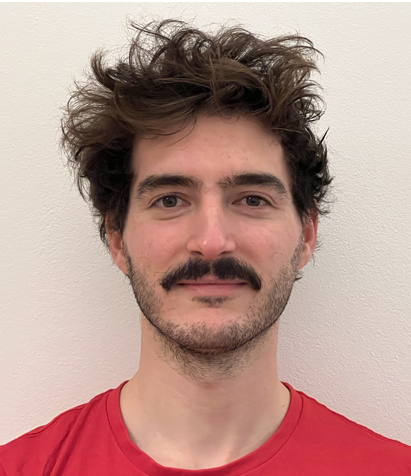
Paolo Testolina
Research Scientist
Education
- Ph.D. in Information Engineering - University of Padova, Italy (2022)
- M.Sc. in Telecommunication Engineering - University of Padova, Italy (2018)
- B.Sc. in Information Engineering - University of Padova, Italy (2016)
Research Interests
- Non-Terrestrial Networks
- Spectrum Sharing and Coexistence
- 5G and beyond cellular networks
Paolo Testolina is a Research Scientist at the Wireless Networks and Embedded Systems (WiNES) Laboratory and at the Ultrabroadband Nanonetworking (UN) Laboratory at the Institute for Intelligent Networked Systems, with Prof. Tommaso Melodia and Prof. Josep Jornet. His research focuses on studying and designing wireless communications systems, with a keen interest on channel modeling, spectrum science and everything space-related.
Publications
2026
Journals & Magazines
2025
Journals & Magazines
Conference Papers
We analyze the open-loop mechanical tracking performance of a sub-Terahertz (sub-THz) and Terahertz (THz) uplink communication system. These high-frequency bands enable multi-gigabit links through large bandwidths and narrow beams, but require precise pointing to overcome spreading loss. A tracking system can be used to orient horn antennas toward mobile targets. We develop a mathematical model that captures the mechanical dynamics of a real tracking system, which includes motion latency and acceleration and velocity limits, to quantify pointing errors during satellite passes and integrate these effects into the link budget. We evaluate the trade-offs between beam directionality and pointing tolerance across different Low Earth Orbit (LEO) satellite trajectories and control strategies. The results link the hardware limitations to the communications performance, providing design guidelines for high-frequency Non-Terrestrial Network (NTN) uplink under practical mechanical constraints.
“Spectrum Sharing Across Terrestrial and Non-Terrestrial Services in the FR3 Upper Midband.”
2025 IEEE International Symposium on Dynamic Spectrum Access Networks (DySPAN)
(2025)Conference
2024
Journals & Magazines
“Modeling Interference for the Coexistence of 6G Networks and Passive Sensing Systems.”
IEEE Transactions on Wireless Communications
(2024)Journal
Conference Papers
Digital twins are now a staple of wireless networks design and evolution. Creating an accurate digital copy of a real system offers numerous opportunities to study and analyze its performance and issues. It also allows designing and testing new solutions in a risk-free environment, and applying them back to the real system after validation. A candidate technology that will heavily rely on digital twins for design and deployment is 6G, which promises robust and ubiquitous networks for eXtended Reality (XR) and immersive communications solutions. In this paper, we present BostonTwin, a dataset that merges a high-fidelity 3D model of the city of Boston, MA, with the existing geospatial data on cellular base stations deployments, in a ray-tracing-ready format. Thus, BostonTwin enables not only the instantaneous rendering and programmatic access to the building models, but it also allows for an accurate representation of the electromagnetic propagation environment in the real-world city of Boston. The level of detail and accuracy of this characterization is crucial to designing 6G networks that can support the strict requirements of sensitive and high-bandwidth applications, such as XR and immersive communication.
2021
Journals & Magazines
“Accuracy vs. Complexity for mmWave Ray-Tracing: A Full Stack Perspective.”
IEEE Transactions on Wireless Communications
(2021)Journal
Conference Papers
“On the Role of Sensor Fusion for Object Detection in Future Vehicular Networks.”
Joint European Conference on Networks and Communications 6G Summit (EuCNC/6G Summit)
(2021)Conference
“Hybrid Point Cloud Semantic Compression for Automotive Sensors: A Performance Evaluation.”
IEEE International Conference on Communications (ICC)
(2021)Conference
2020
Conference Papers
“Machine Learning-Aided Design Of Thinned Antenna Arrays For Optimized Network Level Performance.”
14th European Conference on Antennas and Propagation (EuCAP)
(2020)Conference
2019
Conference Papers
“Enabling Simulation-Based Optimization through Machine Learning: A Case Study on Antenna Design.”
2019 IEEE Global Communications Conference (GLOBECOM)
(2019)Conference